
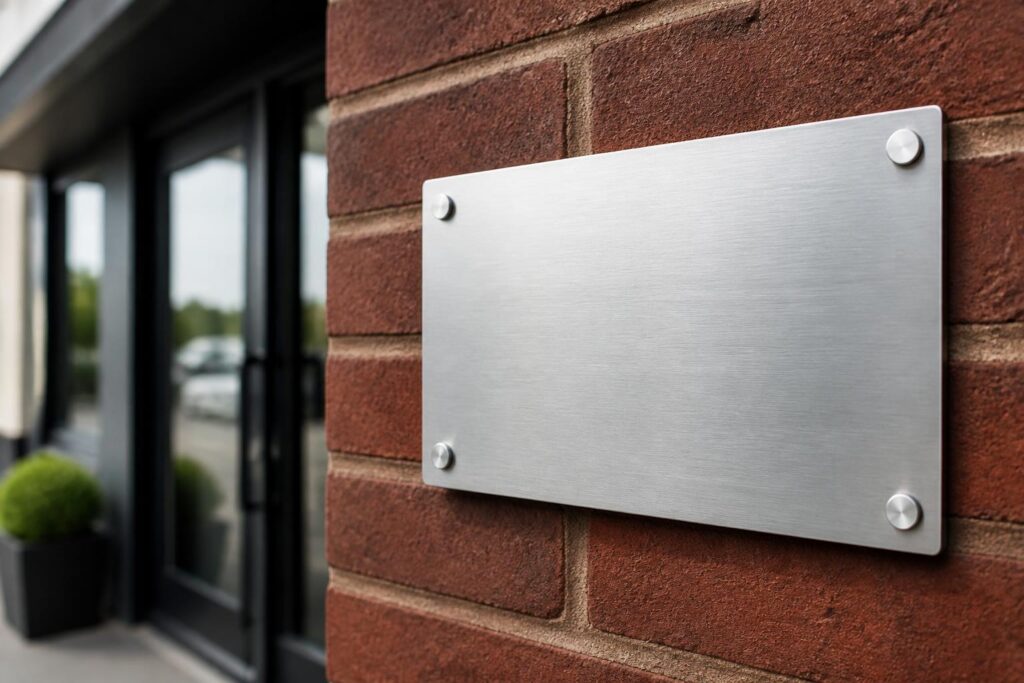
Unlike temporary signs or simple printed notices, metal signage creates a more permanent impression. It communicates clarity, structure and attention to detail. For companies, this can support a professional brand image. For private homes, it can improve the appearance of an entrance, gate, garage or garden area. Anyone looking for robust and stylish signage solutions can explore Otypo for customised signs suitable for different purposes.
Why metal signs are a popular choice
The biggest advantage of metal signs is their durability. Signs placed outdoors are exposed to rain, wind, sunlight, frost and changing temperatures. A poor-quality sign can fade, bend or become difficult to read over time. Metal, on the other hand, offers a stable and resistant solution when the right material and finish are chosen.
Metal signs also have a premium look. A company sign made from metal immediately feels more professional than a temporary plastic or paper solution. It shows that the business values presentation and reliability. The same applies to nameplates, house signs, door signs and directional signs. Metal gives these everyday objects a clean, solid and trustworthy appearance.
Common materials used for metal signs
Several types of metal are commonly used for signage. Aluminium is one of the most popular options because it is lightweight, versatile and resistant to corrosion. It is suitable for both indoor and outdoor use and can be printed, coated or finished in different styles. Because aluminium is not too heavy, it is also practical for larger signs.
Stainless steel is another excellent choice, especially when a particularly elegant and durable finish is desired. It is often used for office signs, business signs, house signs and professional nameplates. Stainless steel can have a brushed, polished or matte surface, depending on the desired look. It works especially well with modern buildings, glass, concrete, stone and minimalist architecture.
Coated metal signs offer additional design flexibility. A protective coating can improve resistance and allow for different colours or finishes. This makes coated metal a good option when a specific visual style is required. The best material depends on where the sign will be installed, how visible it needs to be and what kind of impression it should create.
Metal signs for businesses
In business environments, metal signs are used in many ways. A company may need a sign for the main entrance, a reception area, office doors, parking spaces, warehouses or internal directions. Clear signage helps visitors, customers and suppliers find their way without confusion. At the same time, it contributes to a consistent and professional appearance.
A high-quality metal sign at the entrance of a business can make a strong first impression. Before a customer speaks to anyone, the sign already communicates something about the company. A clean, well-designed sign suggests organisation and reliability. This is particularly important for offices, medical practices, law firms, agencies, hotels, restaurants and service providers.
Metal signs are also useful in industrial and practical settings. Workshops, storage areas and production facilities often need signs for safety notices, machine labels, restricted areas or directional information. In these places, signs must be clear, durable and easy to clean. Metal is often a sensible choice because it can handle tougher conditions better than many lighter materials.
Metal signs for homes and private properties
Metal signs are not only useful for companies. They can also improve the appearance and functionality of private properties. A metal house number sign, family name sign or gate sign can make an entrance look more polished and welcoming. It also helps visitors, delivery drivers and postal services identify the property quickly.
In gardens, garages, driveways and holiday homes, metal signs can provide useful information while still looking attractive. A sign can mark a private area, display a property name, identify a guest house or provide a polite notice. Because metal is weather-resistant and visually strong, it is ideal for outdoor private use.
Design matters: readability comes first
A good sign should always be easy to read. This sounds simple, but it is one of the most important parts of sign design. The font, size, colour contrast and layout all affect how quickly people can understand the message. A sign that looks decorative but cannot be read easily does not fulfil its purpose.
For outdoor signs, the text should usually be larger and more direct. People may need to read it from a distance, from a vehicle or while walking past. Strong contrast between the lettering and the background is essential. For example, dark lettering on a light metal surface or light lettering on a dark background can work very well.
Businesses may also want to include a logo, brand colours or a specific typeface. This can help the sign match the company’s wider visual identity. However, the design should not become too crowded. Too much information can make a sign look messy and reduce readability. A clean layout usually creates a stronger and more professional result.
Choosing the right size and placement
The size of a metal sign should match its purpose. A small door sign only needs to be readable from close range, while an outdoor company sign may need to be seen from the street. A parking sign, directional sign or building sign may require larger lettering and a more visible position.
Placement is just as important as size. A sign should be installed where people naturally expect to find information. For example, a business sign should be visible near the entrance, while a house name sign should be placed near the door, gate or driveway. Poor placement can make even a well-designed sign less effective.
Mounting and installation
Metal signs can be mounted in different ways depending on their size, weight and location. Screws are a strong and reliable option, especially for outdoor installation. Stand-off fixings can create a more elegant effect by holding the sign slightly away from the wall. Adhesive mounting may be suitable for smaller signs on smooth indoor surfaces, but it must be strong enough for the material and environment.
Before installation, the surface should be checked carefully. Brick, wood, plaster, glass and metal all require different mounting methods. The sign should also be aligned properly. Even a high-quality metal sign can look careless if it is installed unevenly.
Maintenance and long-term appearance
Metal signs are generally easy to maintain. Most can be cleaned with a soft cloth and mild water. This helps remove dust, fingerprints, rain marks and dirt. Harsh cleaning products should usually be avoided, especially on polished, coated or brushed surfaces, because they may damage the finish.
With proper care, a metal sign can remain attractive and readable for many years. This makes it a cost-effective choice over time. While metal signs may look more premium than basic alternatives, their durability and strong visual impact often make them a worthwhile investment.
Conclusion: metal signs combine strength and style
Metal signs are an excellent solution for anyone who needs signage that is durable, professional and visually appealing. They are suitable for businesses, offices, workshops, public areas and private homes. With the right material, design, size and installation method, a metal sign can provide clear information while also improving the overall appearance of a space.
Whether used as a business sign, house sign, nameplate, warning sign or directional sign, metal signage offers a strong balance of function and style. It is a small detail that can make a lasting impression.